Monday, October 5, 2026
Issue #3 · 5 min read

The last edition asked a question that felt like an exercise: what happens when betting money leaves esports? The answer arrived this week, in human terms: a player without a team, a jersey without a logo and an entire festival with a new owner.

In today's issue
⏳ The server emptied out: three orgs out of CS2
💸 A seven-figure donation: Xposed becomes a Luminosity owner
🏦 The respawn came from a bank: Nedbank takes over rAge Nation
⚡ Quick takes: Thunderpick, Astralis, Monster and Mountain Dew
📊 The stat that breaks the gamer stereotype
Quick takes
Counterflow: in the same week Brazil takes bookmakers off the map, Thunderpick signs 12 months as presenting partner of the Esports Awards 2026, which becomes "Esports Awards Presented by Thunderpick" through the 11/17 ceremony in Miami. The deal's number: Denmark's corporate registry reveals Courtois and Gonzalo Vila invested ~DKK 3.2 million (~US$ 484K) for ~2.4% of Fusion, Astralis' owner, at almost 4x the price per share of previous rounds. A creator army: Monster signed multi-year deals with Xyaa, Sensei and Neyoo, reaching five "Monster athletes" at Revenant XSpark, the largest pool of creators from a single Indian org sponsored by the brand. Naming renewal: Mountain Dew stays on as title sponsor of PMPS 2026 Season 2, Krafton's Korean PUBG Mobile circuit, for the second straight year, with the LAN final on October 17-18 at the Daejeon Esports Arena.
The server emptied out: the betting MP pulls LOUD and Keyd Stars out of CS2
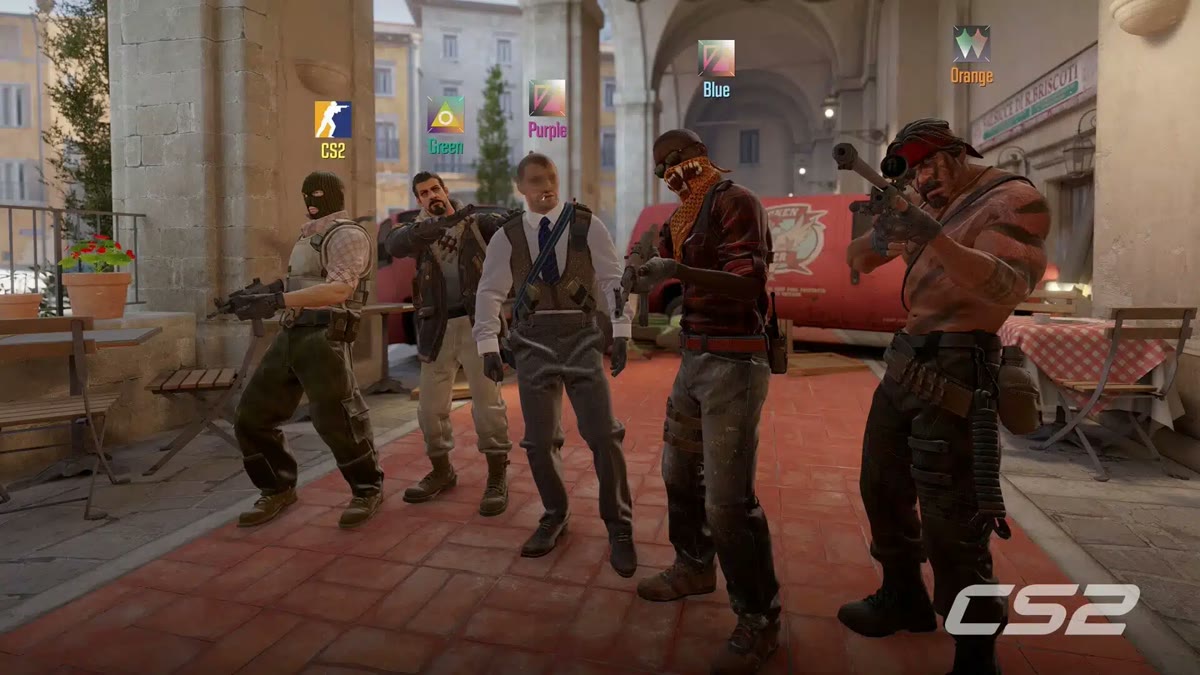
Counter-Strike 2 characters lined up on a map
Image: Esports Insider
Betting advertising had until today (10/5) to come off the air, and sites and apps shut down tomorrow (10/6). The losses arrived ahead of the deadline. Keyd Stars paused its CS2 project indefinitely, with EstrelaBet as its main sponsor, and LOUD released the team it signed in May, paid a bootcamp in Portugal for and never announced. ODDIK left Counter-Strike in the same week. Three organizations out of the same game in seven days.
The cleanup separated who had a plan B from who held on until the end: MIBR, Fluxo W7M and FURIA have started pulling betting brands from their communications, while Legacy (Rainbet) and Imperial (Gamdom) keep displaying their partners. Esports outlet Dust2 Brasil canceled the BetBoom Storm tournament series. In an attempt to stall the measure, the ANJL and IBJR associations petitioned Brazil's Supreme Court to suspend it.
Betting money was not a budget extra. It was the foundation.
The question ed. 2 left open got its answer in a week. When betting money leaves, the team leaves with it. The space opening on jerseys, broadcasts and naming rights, in the world's third-largest esports market, is a door for consumer brands, with sellers pressed by the deadline. And the picture can flip again: if the Supreme Court grants the injunction the associations requested, the board resets.
Sources: Esports News UK · HLTV · Esports Insider · Shane The Gamer
A seven-figure donation: Xposed becomes a Luminosity owner
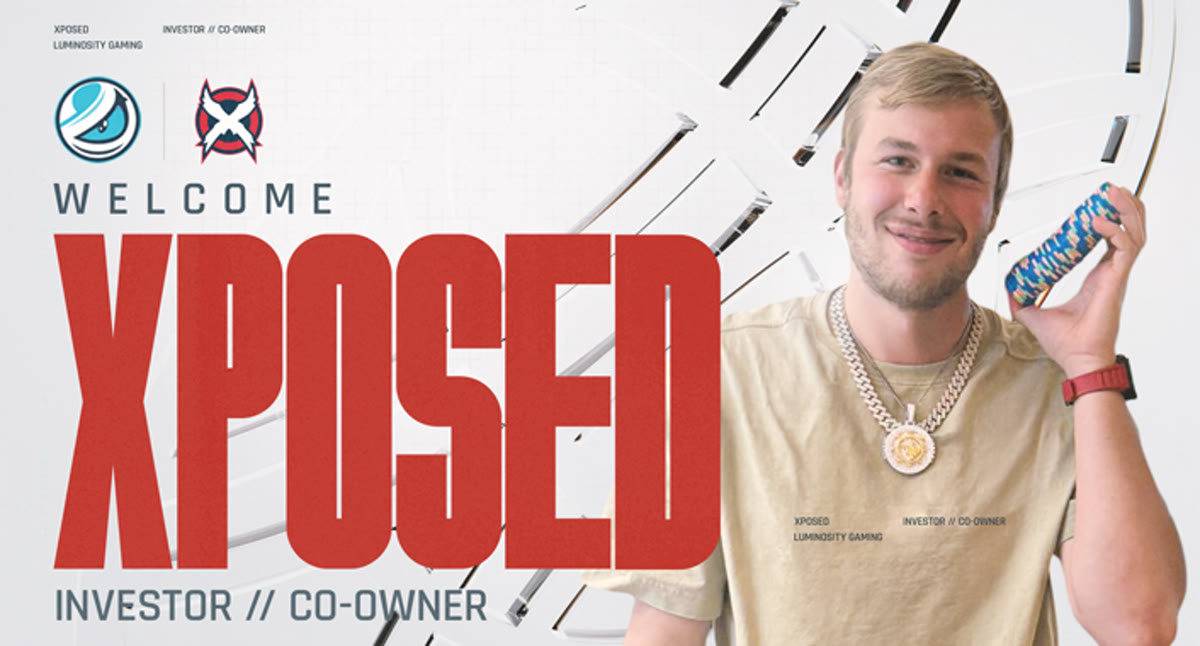
Luminosity Gaming welcome art announcing Xposed as investor and co-owner
Image: Luminosity Gaming
Luminosity Gaming announced on Saturday (10/4) that Canadian streamer Xposed invested seven figures in the organization and joined the ownership group, doubling as a brand ambassador. Founder Steve Maida spelled out the weight of the investment in the official note itself: without his support, the return to Counter-Strike would not have been possible.
The context improves the deal. Luminosity is a legacy brand, champion of the Columbus 2016 Major and owner of more than 80 titles, but it lives in rebuild mode: it was resold to Maida in January for C$ 300K, after a troubled stint under Vertiqal, which kept the historical debts. The creator did not buy hype at the top of the cycle: he bought a known brand on the cheap, with a clean ownership structure.
Owning a big brand is cheap for whoever brings their own audience.
It is the Courtois thesis, with the investor coming from inside the house. Ed. 1 announced the goalkeeper's investment in Astralis without figures; the Danish corporate registry showed this week ~US$ 484K for ~2.4% of Fusion, at a company whose auditor questions its ability to keep operating. For whoever sells sponsorship, a creator in the ownership group became a competing product to the traditional sponsor.
Sources: Luminosity Gaming · Esports Advocate, January sale · Esports Advocate, Danish registry · Esports Insider
The respawn came from a bank: Nedbank takes over rAge Nation
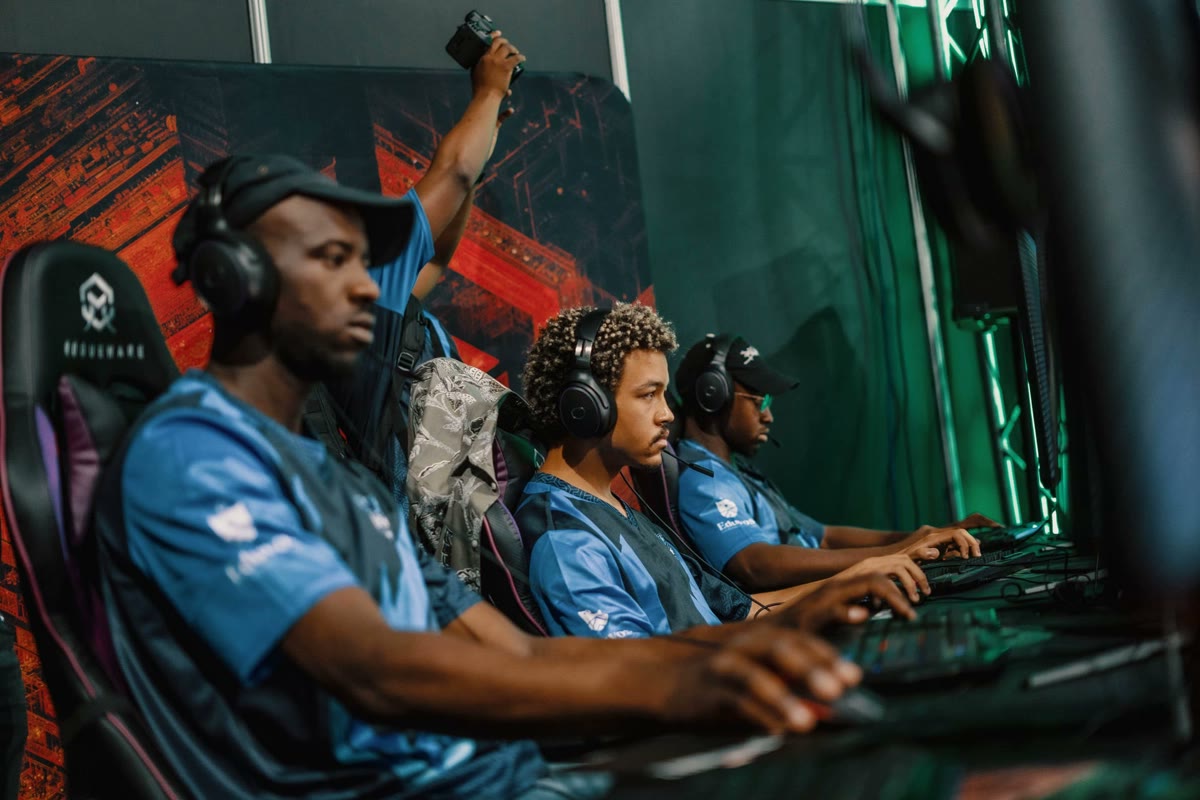
rAge Nation esports stage with players competing
Image: rAge Nation
While Brazil switches off the category that kept sponsorship alive, the answer on who takes the space arrives from South Africa. Nedbank is the new headline sponsor of rAge Nation, the Johannesburg gaming festival that has gathered the South African community for more than two decades, this time from November 27 to 29.
The design of the sponsorship matters more than the name on the facade. The Nedbank Esports Arena, a platform the bank already ran for the amateur scene, becomes a digital hub with discounts on game credits, rewards for spending on the platform and access to tournaments. Sponsorship designed to retain customers, not just to show a logo.
When the bookmaker leaves, the bank arrives.
It is the first concrete evidence of who competes for the showcase the bookmakers leave behind. Banks have been testing esports for years, but this deal raises the bar: naming rights on a festival with two decades on the road plus a digital product carrying the brand. For Brazil's newly opened market, fintechs and banks just got a case study on how to enter with product and permanence, not just a billboard.
Source: Lifestyle and Tech
Gamers Club take
The last edition asked what happens when betting money leaves. The answer arrived in facts: an organization out of CS2, sponsors off the jersey, a tournament off the calendar. The space opening on broadcasts and naming rights did not lose value; it loses value if it sits empty. The movement has already started outside Brazil: a bank took the headline slot of a festival in South Africa, an energy drink built a creator army in India. This week's data point shows who buys here: 90.4% of gamers have home-cooked food in their routine. A supermarket audience, measured with first-party data.
Whoever enters now buys permanence, not a banner.
Gamers Club translator
What is the MP that pulled bookmakers out of Brazilian esports
A provisional measure is a norm Brazil's president signs with force of law on the same day, and Congress has 120 days to approve or strike down. MP 1.394/2026 banned the operation and advertising of bookmakers, and sponsorship counts as advertising. The clock is short: ads off air on October 5, sites and apps shut down on the 6th. Off the map go 188 brands, and the space the category paid the most for sits open: jersey, team name and broadcast. Industry associations ANJL and IBJR asked Brazil's Supreme Court for an injunction to suspend the measure. The decision has not landed; until it does, the rule stands and the showcase sits empty.
Sources: Senado Federal, MP scope and timeline · Ministério da Saúde, official timeline · MP 1.394/2026 statement of purpose (Planalto) · Shane The Gamer, Supreme Court petition
Exclusive GC data
90.4%
5,784 of 6,399 gamers include home-cooked food in their routine: only 24.2% include junk food. The pattern holds even among those who play more than 6 hours a day (85.9%).
This base's routine also includes coffee (42.1%), protein supplements (24.6%) and restaurant meals (29.5%). The gamer consumes like the average Brazilian: not like the caricature.
Source: GC Interest Survey 2026, 8,164 responses (valid base 6,399), collected Jan 7 to 16, 2026

The money left, three teams left with it, and the first to arrive was a bank. The audience stayed in its routine, with home-cooked food on the table. Until the next round.

Forward Minimap to whoever decides where sponsorship budgets work.

Issue poll
Do you remember seeing a bank or fintech sponsoring esports teams, tournaments or streamers?
Yes   No