MONDAY, SEPTEMBER 28, 2026
Issue #6 Β· 8-minute read

Esports this week was about the bill a wrong structure charges.

Complexity shut down 23 years of operations after a buyback financed by the seller itself failed to close. Esports left the Asian Games and got its own event in Kuwait for 2027. Champions Shanghai opened bigger than Paris, even with all four home teams leaving the first round without winning a single map. And France's biggest broadcaster started treating an esports org as licensable IP.

Along the way, a number that speaks to all of it: in a Gamers Club survey of 1,448 respondents, 71.3% said they had stopped engaging with an ad because it felt like the brand knew too much about them.

This edition, Minimap looks at what sustains (or kills) an operation: the structure of the money, the revenue model and the shape of the message.

On to this week's map.

Quick takes
Home turf: realme signs with Fluxo W7M and takes smartphone category exclusivity, covering CS2, R6, MLBB, Free Fire, creators, broadcasts and the fan-membership program. The Chinese brand leaves Alpha 7 and picks the ~10 million-follower org as its only active competitive partnership in Brazil, with a declared mobile focus. Peripherals: Razer becomes official headset partner of BLAST Premier through 2028, covering 12 events on the CS2 circuit, debuting at BLAST Premier Rivals Hong Kong (Nov 11-15). Sleep: KPL, China's Honor of Kings league, signs Serta as official smart sleep partner for its 10th anniversary, with the AI DREAM X1 mattress as anchor product. A wellness category entering a tier-1 league through the performance door. Streaming: Kick sponsors Team Apex Gaming, the org of creator Jonathan Amaral, as official livestreaming sponsor in India. The platform keeps buying position in the world's youngest gaming market. Behind the scenes: Kings League hires Anadege Freitas, former Twitch exec, as Brazil GM on the eve of Kings Cup Brazil. A football-creator league hiring media and games people, not football people.
In today's issue
πŸ’€ Complexity bought itself on credit. The bill came due.

🏟️ Esports moved out of its parents' house: its own event in Kuwait in 2027
πŸ“Ί Champions Shanghai: a full house, and the home teams won zero maps
πŸš— A car joined Vitality's roster, and TF1 wants to license the rest
πŸ—ΊοΈ Gamers Club translator: what a seller note is
Complexity bought itself on credit. The bill came due.
Complexity Gaming
Image: Insider Gaming
Jason Lake confirmed in a video on X on 9/23: Complexity, founded in 2003 and owner of more than 140 titles across some 30 games, has ceased operations. The decision had been made at the end of 2025, months after the organization left CS2 (Aug/2025) because it could no longer fund a tier-1 roster. (HLTV, 9/23)
The mechanism of death is the part that matters to whoever signs the check. Lake bought the organization back from GameSquare in Mar/2024 for US$10.36 million, in a deal backed by a US$9.61 million seller-held note: the seller financed its own sale and became the buyer's creditor. With no capital to pay off the note, ownership of the brand automatically reverted to GameSquare. (esports.gg)
And that is where the story hits a dead end. GameSquare owns FaZe: with the Complexity brand in the same stack, a return to CS2 runs into a conflict of interest between subsidiaries. Lake summed up the choice as preferring an "orderly and professional" shutdown to "crashing it into the sun", and made clear he is not retiring: he plans to come back. (Insider Gaming / Dust2.us)
It is the anatomy of a clean failure: seller-note M&A, a capital winter and the cost of an elite roster ended a 23-year-old brand even with experienced management and a planned exit.
Complexity's IP survived the end of the org: it changed hands and, under FaZe's owner, is now blocked from returning to CS2.
πŸ’€ 23 years of history, 140+ titles across roughly 30 games
πŸ’° US$10.36M buyback backed by a US$9.61M note that was never paid off
πŸ” IP reverts to GameSquare, owner of FaZe, blocking a CS2 return over subsidiary conflict
πŸšͺ Left CS2 in Aug/2025 over tier-1 roster costs; shutdown decision made at the end of 2025
The takeaway for anyone sizing up an org as an asset: capital structure now sits in due diligence at the same level as audience and results. A 23-year-old brand can outlive its own end, but on someone else's balance sheet and unable to compete in the same circuit as the neighboring subsidiary.
Sources: HLTV Β· esports.gg Β· Insider Gaming Β· Dust2.us
Esports moved out of its parents' house: in 2027 it gets its own event in Kuwait
Asian Esports and Mind Sports Games
Image: Insider Gaming
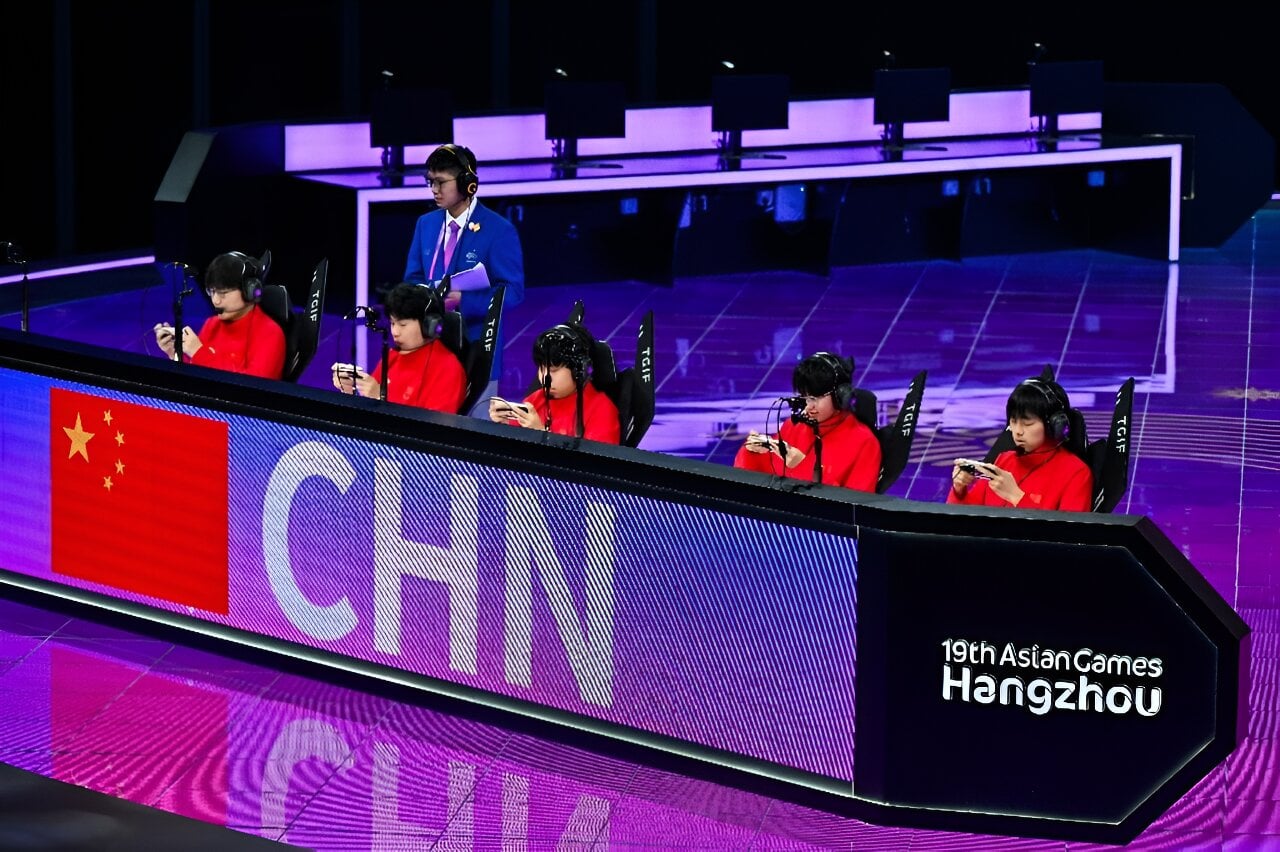
The Olympic Council of Asia signed the Host City Contract with Kuwait during the opening of Aichi-Nagoya 2026: in 2027 the country hosts the inaugural Asian Esports and Mind Sports Games, a dedicated event bringing esports and mind sports (chess, go, bridge) together with around 4,000 athletes. (OCA, official)
With the signature, Aichi-Nagoya becomes esports' last appearance on the Asian Games program. The withdrawal had been approved by the OCA board back in Nov/2024 and now has a successor with a host and a date. It is the first new event launched under president Sheikh Joaan bin Hamad Al-Thani, and the Philippines are already negotiating the 2029 edition, with a decision expected at the OCA assembly in Doha in 2027. (Dot Esports / Arab Game News)
The calendar may get tight: Saudi Arabia's Esports Nations Cup was pushed to November 2027, opening the possibility of two major national-team events almost in the same window. Nothing confirmed, but anyone planning spend is already watching that scenario. (Insider Gaming)
Esports stopped being a guest attraction inside multisport and became a product that has to pay its own bills.
🏟️ Kuwait hosts in 2027 the first Asian Esports and Mind Sports Games, with about 4,000 athletes
πŸ… Aichi-Nagoya 2026 is the farewell of esports to the Asian Games program (withdrawal approved in Nov/2024)
πŸ‡΅πŸ‡­ Philippines already negotiating 2029; decision expected at the OCA assembly in Doha (2027)
πŸ“… Tight calendar: the Saudi Esports Nations Cup moved to Nov/2027 and may share the window
For anyone planning spend: the new event is inventory with no track record, cheap to enter and demanding to prove. Media rights, sponsorship and host fees stop riding the Asian Games' coattails and now have to sustain a product with no titles, no format and no past editions. And the geopolitical axis holds: after Saudi Arabia, one more Gulf country is buying institutional esports infrastructure.
Sources: OCA Β· Dot Esports Β· Arab Game News Β· Insider Gaming
Champions Shanghai: a full house, and the home teams won zero maps
Valorant Champions 2026 in Shanghai
Image: Riot Games / VALORANT Esports (image from the official Flickr, via pley.gg)
Valorant Champions 2026 (Shanghai, 9/24 to 10/18, 16 teams, US$2.25 million) opened with a peak of 605,800 concurrent viewers on day one, above Paris 2025's opening day. More than 280 unique channels carried the broadcast (versus roughly 230 last year) and average English-language viewership rose 11.8%. (White Market)
The contrast is the other half of the headline: all four Chinese teams finished the first round without winning a single map, a collapse in front of the home crowd that pley.gg summed up as "Zero Maps Won". (pley.gg)
And it is the last Champions under the closed model: starting in 2027 the VCT moves to Cups with Open Qualifiers, bringing the circuit closer to the CS2 model. Open qualifiers begin in November and free agency opens on 11/2. (Valorant Esports, official)
Viewership peaked even with the hosts winless in the very first round.
πŸ“Ί Peak of 605,800 viewers on opening day, above Paris 2025
🌐 280+ unique channels broadcasting (about 230 in 2025); average English viewership +11.8%
πŸ‡¨πŸ‡³ All 4 Chinese teams went winless in round one without taking a map, at home
πŸ”“ Last closed Champions: in 2027, Cups and Open Qualifiers arrive in the CS2 model
The read for anyone buying presence at a host-venue event is twofold. Distribution across more channels and co-streams already sustains the peak without a live local team, which kills the thesis that audience needs the host still playing. At the same time, China's competitive failure complicates commercially the market Riot most needs to convert. And the closed era's track record is a floor, not a ceiling: the 2027 Champions is already a different product.
Sources: White Market Β· pley.gg Β· Valorant Esports
A car joined Vitality's roster, and TF1 wants to license the rest
Team Vitality
Image: Gaming Newsroom / TF1
Announced in Paris on 9/24: TF1 Licensing, an arm of France's biggest broadcaster, added Team Vitality to its portfolio and secured rights to develop and activate the organization's brand across licensing, branded content and experiences. (Gaming Newsroom)
The first activation, created by TF1 Factory for BYD, ran at EWC 2026 around the Dolphin G launch: the car joins the roster as the "New (G)amer", with a trailer translating the vehicle's specs into game language and a social-first series starring Rocket League players shot on onboard cameras. (EE Gaming)
At the negotiating table, Vitality uses its usual numbers, according to the organization itself: 23M+ followers, 115M annual reach and an audience 84% in the 18-34 bracket. It is the kind of asset TF1 has known how to sell for decades in football and entertainment.
TF1 licensed the Vitality brand, not the team.
πŸ“Ί TF1 Licensing takes the Vitality brand for licensing, branded content and experiences
πŸš— First activation: BYD Dolphin G joins the roster as "New (G)amer" at EWC 2026
πŸ“Š Vitality negotiates with 23M+ followers, 115M annual reach and 84% in the 18-34 bracket (per the organization)
πŸ‡«πŸ‡· TF1 is France's biggest broadcaster and treats the org as licensable IP, the model that sustains football and entertainment
In the same week Complexity showed the cost of relying on the wrong money structure, Vitality is testing the revenue line least dependent on server results. If the model sticks, media + sponsorship + licensing becomes the standard tripod of major orgs, and opens the door for brands that want the gaming audience without buying jersey inventory.
Sources: Gaming Newsroom Β· EE Gaming
Gamers Club translator
Seller note, the loan that sold Complexity twice
When Jason Lake bought Complexity back from GameSquare in March 2024, the deal looked like a rescue: the founder was recovering the brand he had sold years earlier. But of the US$10.36 million operation, US$9.61 million never changed hands. That slice became a seller-held note: the seller financed its own sale.
In practice, it is a loan. Instead of paying cash or knocking on a bank's door, the buyer owes the money to whoever sold. The arrangement is common in M&A when the buyer cannot get market credit, or when the parties need to close a valuation gap to make the deal happen. For the seller, it completes the sale and earns interest. For the buyer, it is a way to take over the asset without immediate capital. The risk lives in the default clause: if the debt is not paid on the agreed terms, the asset can return to the creditor. That is what happened. Unable to raise capital to pay off the note, ownership of the Complexity brand reverted to GameSquare.
In a seller note, the seller never leaves the stage. It becomes the bank.
The detail that complicates Complexity's future is who ended up with the IP. GameSquare also controls FaZe, another organization on the Counter-Strike circuit. Two brands from the same house in the same circuit create a conflict of interest that leagues and organizers treat as unacceptable, which effectively closes Complexity's path back to CS2 while the IP sits in that stack.
The lesson for anyone signing contracts in esports: brand strength alone does not hold an operation. When money gets tight, the deal structure controls the asset. It deserves the same due diligence as the audience.
Sources: esports.gg Β· Dust2.us Β· HLTV
Exclusive GC data
71.3%
1,032 of 1,448 valid respondents said they had stopped engaging with an ad because it felt like the brand knew too much about them.
The punishment is greatest among those who value personalization most: among respondents who rated its importance 4 or 5, 79.4% had already abandoned an invasive ad. The top attention trigger is a real reward "for my browsing and my game" (39.6%).
Source: GC Consumers and Advertising Survey H1-2026, 1,448 valid responses, collected March 20-23, 2026
Gamers Club take
Complexity had 23 years of history and more than 140 titles across some 30 games. None of it saved the org: Jason Lake's 2024 buyback was backed by a US$9.61 million seller-held note and, with no capital to pay it off, ownership of the brand reverted to GameSquare, the owner of FaZe. The week told the same story from both sides. Kuwait bought from the Olympic Council of Asia an institutional event that now has to prove it can sustain itself commercially. TF1 treated Team Vitality as licensable IP and tested the third revenue leg of organizations. The message is one: in today's esports, the structure of the money decides survival as much as the strength of the brand.
For brands, the same yardstick applies to the message. This edition's exclusive data point measures where it breaks: in GC's advertising survey with 1,448 players, 71.3% said they had stopped engaging with an ad because it felt like it used too much information about them. The punishment is greatest exactly among those who value personalization most: among respondents who rated its importance 4 or 5, 79.4% had already abandoned an invasive ad. What pushes the player away is data used with a surveillance feel.
Good sponsorship is the one that becomes a benefit, not the one that watches.
The answer sits in the same base. This audience converts: 75.0% have researched a product on their smartphone after seeing an ad and 37.2% bought after receiving the formats shown. What makes the player pay attention is a real reward "for my browsing and my game" (39.6%, the top answer), and in retargeting what most drives clicks is an exclusive discount or benefit (47.5%). GC's position: good sponsorship is the one that becomes a benefit, not the one that watches. That is why we design sponsored championships and in-game media as value delivered inside the match, measured by first-party data on what 3 million users accept and what they reject. The brand that enters the game as a reward wins the audience that clicked; the one that enters as tracking pays a high price to be abandoned.
Sources: HLTV, Complexity shutdown Β· esports.gg, US$9.61M seller note Β· OCA, Host City Contract with Kuwait Β· Gaming Newsroom, TF1 x Team Vitality Β· GC Consumers and Advertising Survey H1-2026, 1,448 valid responses, collected March 20-23, 2026

Money does not save a wrong structure. It held true for Complexity and it holds for the message that reaches the audience.

This edition's data point shows the same principle on the other side: 71.3% of respondents said they had already abandoned an ad that seemed to know too much about them. What wins attention back is not more tracking, it is real reward. The wrong financing structure kills an org. The wrong message structure kills the relationship with the audience.

If this issue helped you rethink where esports spend really works, forward Minimap to someone who also decides where to invest in esports.

Until the next round.

Issue poll
Have you ever stopped engaging with an ad because you felt it used too much information about you?
Yes No